Mapping the Progression of Bet Types as They Evolved from Physical Tables to Virtual Formats in Regulated UK Casinos
Avery Foster · Aug 23, 2026
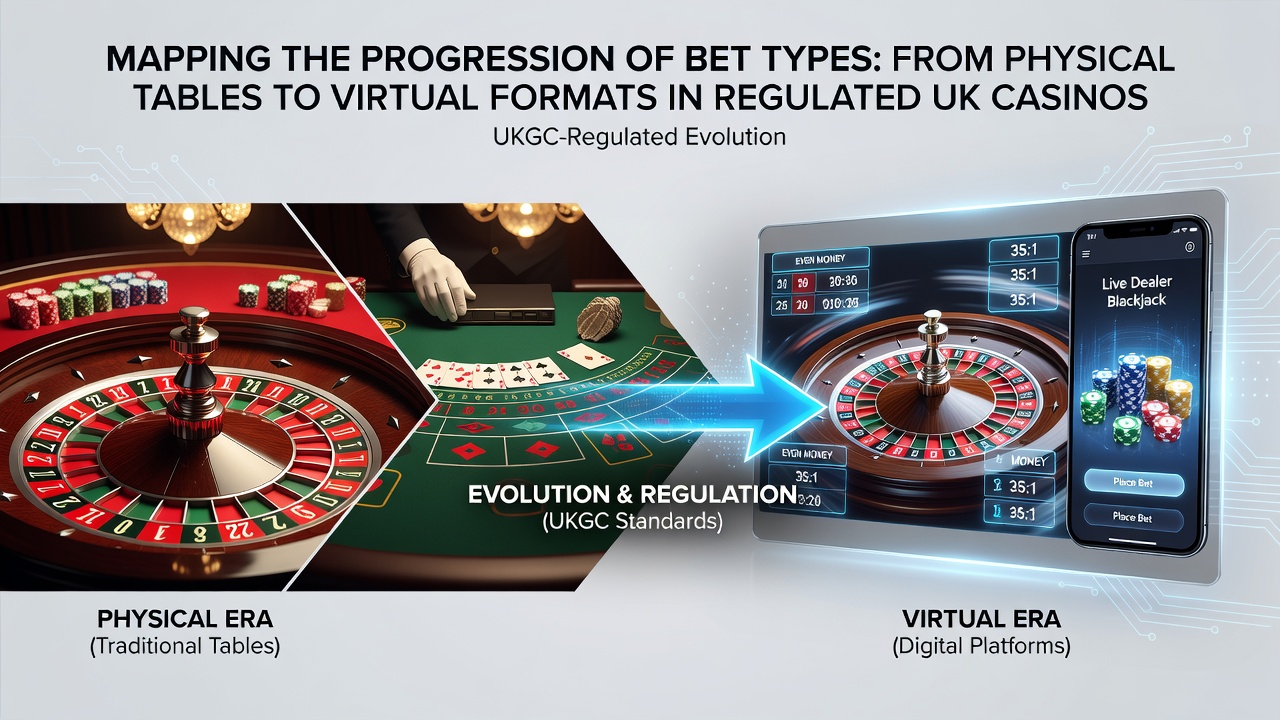
Mapping the Progression of Bet Types as They Evolved from Physical Tables to Virtual Formats in Regulated UK Casinos
Physical craps tables in regulated UK venues long relied on a core set of wager options that players placed directly on felt layouts, including the pass line bet which wins on a 7 or 11 come-out roll and loses on 2, 3 or 12, while the don't pass bet operates in reverse and incorporates the bar on 12 rule to adjust house edge calculations. Observers note that these foundational wagers, along with come and don't come bets that mirror their mechanics after a point is established, formed the backbone of table play where dealers tracked multiple simultaneous positions using chips and verbal calls.
Additional options such as place bets on 4, 5, 6, 8, 9 or 10, field wagers covering 2, 3, 4, 9, 10, 11 or 12, and proposition bets like any 7 or hardways added layers of complexity that required precise chip placement and dealer verification at each roll. Data from industry reports indicate that these bet types evolved through decades of casino standardization, with payout structures like 2:1 on 12 in the field or 30:1 on hard 6 remaining consistent across venues because they balanced player engagement against operator margins.
Adaptation of Core Wagers in Early Virtual Conversions
Virtual formats began replicating these established bets through digital interfaces that displayed the same layout graphics and allowed mouse or touch selections, yet the shift introduced automated tracking that eliminated manual dealer errors while preserving identical odds and payout ratios. Researchers have documented how platforms integrated the pass line and odds bets as primary choices, with virtual systems calculating combined payouts instantly after each simulated roll generated by certified random number generators.
Come bets and place bets transitioned smoothly because their conditional triggers on point numbers aligned with programmed logic that highlighted active positions on screen, and players gained the ability to adjust multiple wagers between rolls without physical chip handling. What's notable is that proposition bets retained their high-volatility appeal in digital versions, though interfaces often grouped them into separate tabs to prevent layout clutter on smaller displays.
Expansion of Bet Options Through Interface Enhancements
Virtual environments enabled supplementary bet types that extended beyond physical constraints, such as multi-roll combination wagers and adjustable stake multipliers applied across several numbers simultaneously, features that emerged once software developers standardized mobile-responsive layouts. Figures reveal that these additions allowed users to activate layered strategies like hedging pass line positions with don't come bets in sequences that updated automatically after each outcome.

By August 2026, further refinements incorporated dynamic bet suggestion tools that highlighted statistically common combinations based on historical roll data aggregated across licensed platforms, while maintaining strict separation between game mechanics and any predictive functions. External monitoring from bodies like the International Betting Integrity Association has tracked how such interface-driven expansions preserved regulatory compliance without altering core probability structures.
Buy bets and lay bets, which previously demanded specific verbal instructions at physical tables, became selectable via dropdown menus that automatically applied the 5 percent commission or adjusted it according to point number, streamlining execution for users managing several concurrent positions. Studies from the University of Nevada Las Vegas International Gaming Institute show that these digital adaptations reduced transaction times per decision cycle while expanding the visible range of available wagers on a single screen.
Regulatory and Technological Drivers Behind Bet Standardization
Regulated environments required that all virtual bet types undergo equivalence testing to match their physical counterparts in expected value, prompting developers to embed identical house edge parameters even as new hybrid options appeared, such as progressive side bets tied to consecutive point makes. Those who've examined platform logs note that audit trails now capture every bet selection timestamp and stake amount, creating data sets that support ongoing compliance verification across multiple jurisdictions.
Integration of live dealer streams with virtual overlays further blended formats by allowing remote participants to place traditional pass line or field wagers alongside digital-only features like one-click repeat bets that carried forward previous configurations. This hybrid approach gained traction as connection speeds improved, enabling synchronized roll animations that mirrored the pacing of in-person table action without introducing latency-related discrepancies in bet resolution.
Conclusion
The progression of bet types from physical tables to virtual formats reflects systematic translation of established mechanics into programmable interfaces that retain payout integrity while adding operational efficiencies. Evidence from regulatory testing and platform analytics confirms that core wagers such as pass, come and place bets persist as foundational elements, augmented by interface-specific expansions that accommodate simultaneous multi-position management. Continued alignment between physical precedents and digital implementations ensures that players encounter consistent probability frameworks regardless of format, with documentation from independent oversight organizations providing the benchmarks against which future adaptations are measured.