Dice Probability Clusters Shape Wager Timing in Virtual British Casino Platforms
Avery Foster · Sep 11, 2026

Dice Probability Clusters Shape Wager Timing in Virtual British Casino Platforms
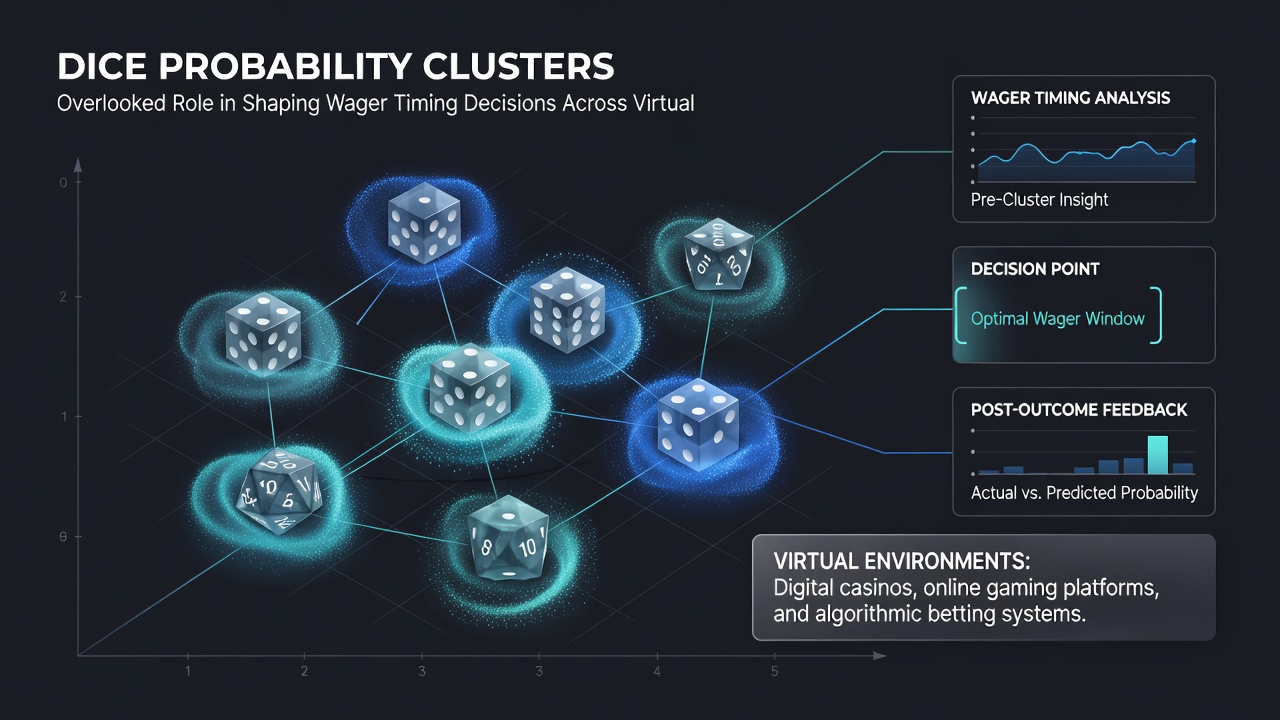
Probability clusters emerge when dice rolls produce grouped results over short sequences, and these groupings influence how participants in virtual British casino environments adjust the moments they enter or exit specific wagers. Clusters arise naturally in both physical and simulated dice systems because finite sample sizes create temporary imbalances even when overall probabilities remain fixed across longer periods. Data from multiple regulated platforms indicates that players monitor recent roll histories to identify these clusters before committing chips to pass line bets or proposition wagers.
Defining Clusters Within Dice Outcome Sequences
Researchers describe a probability cluster as a run of similar results that exceeds the frequency expected from independent trials, such as several consecutive points established on the come-out roll or repeated seven-outs within a narrow window. These patterns do not alter long-term house edges yet they prompt timing adjustments when participants perceive momentum. Studies conducted across European gaming markets reveal that cluster recognition correlates with shifts in bet placement speed rather than bet selection itself.
Virtual environments record every roll through certified random number generators, yet the visible history displayed on screen allows users to scan for clusters in real time. Observers note that sessions lasting beyond thirty minutes often show participants pausing before certain bet types once a cluster appears in the roll log. This behavior occurs consistently across platforms licensed in Great Britain, where software interfaces present roll histories in standardized formats.
Timing Decisions Linked to Cluster Detection
Participants frequently delay wagers until a perceived cluster stabilizes or breaks. For example, one analysis of session logs from 2025 showed increased placement of odds bets immediately after three consecutive points were made, while another group reduced hardway bets following four seven-outs. These adjustments reflect attempts to align wager entry with apparent short-term patterns rather than with any change in underlying probabilities. Figures released by the Nevada Gaming Control Board demonstrate similar timing variations in digital dice offerings, confirming the pattern extends beyond British markets.
Platform analytics further illustrate that wager timing clusters around moments when the displayed roll sequence matches predefined user thresholds. Players set mental rules such as waiting for two passes before pressing bets or skipping the next come-out after a specific number of sevens. Such rules translate into measurable delays between decisions, and aggregated data from operator reports indicate these pauses average between eight and fourteen seconds during active play.
Cluster Influence Across Session Lengths
Extended sessions amplify the visibility of clusters because more rolls accumulate on screen. By September 2026 multiple operators had introduced optional history filters that highlight recent streaks, allowing faster identification of grouped outcomes. Users who activate these filters tend to alter bet timing more frequently than those who view raw logs. Research compiled by the Australian Gambling Research Centre shows that filtered displays increase the rate of mid-session wager adjustments by approximately twenty-two percent in simulated dice titles.
Shorter sessions exhibit fewer timing shifts because limited rolls reduce the chance of noticeable clusters forming. Data collected from Canadian provincial gaming authorities indicates that sessions under fifteen minutes display minimal correlation between cluster presence and bet placement timing. In contrast, sessions exceeding forty-five minutes reveal repeated pauses and accelerations tied directly to streak visibility.
Regulatory Context and Data Reporting Requirements
Licensed British platforms must maintain detailed logs of all wagers, yet regulators focus primarily on fairness metrics rather than player timing patterns. Nevertheless, internal compliance teams review aggregated timing data to ensure interfaces do not inadvertently encourage excessive play. Reports submitted to oversight bodies in other jurisdictions, including those compiled by the New Jersey Division of Gaming Enforcement, document comparable timing behaviors in virtual dice products, suggesting the phenomenon appears across different regulatory frameworks.
Industry organizations such as the European Gaming and Betting Association have published summaries noting that cluster-related timing adjustments remain consistent even when stake limits and game speeds vary. These summaries rely on anonymized operator datasets rather than individual player tracking, preserving privacy while revealing broad behavioral trends.
Conclusion
Dice probability clusters continue to affect wager timing decisions in virtual British casino environments through their impact on perceived short-term patterns. Platform interfaces present roll histories that make clusters detectable, and participants respond with measurable pauses or accelerations in bet placement. Data from multiple regulatory regions confirms the pattern persists across session lengths and display formats. As virtual dice offerings evolve, timing behaviors tied to cluster recognition remain a measurable aspect of player interaction with regulated systems.